 Bullish Portfolio
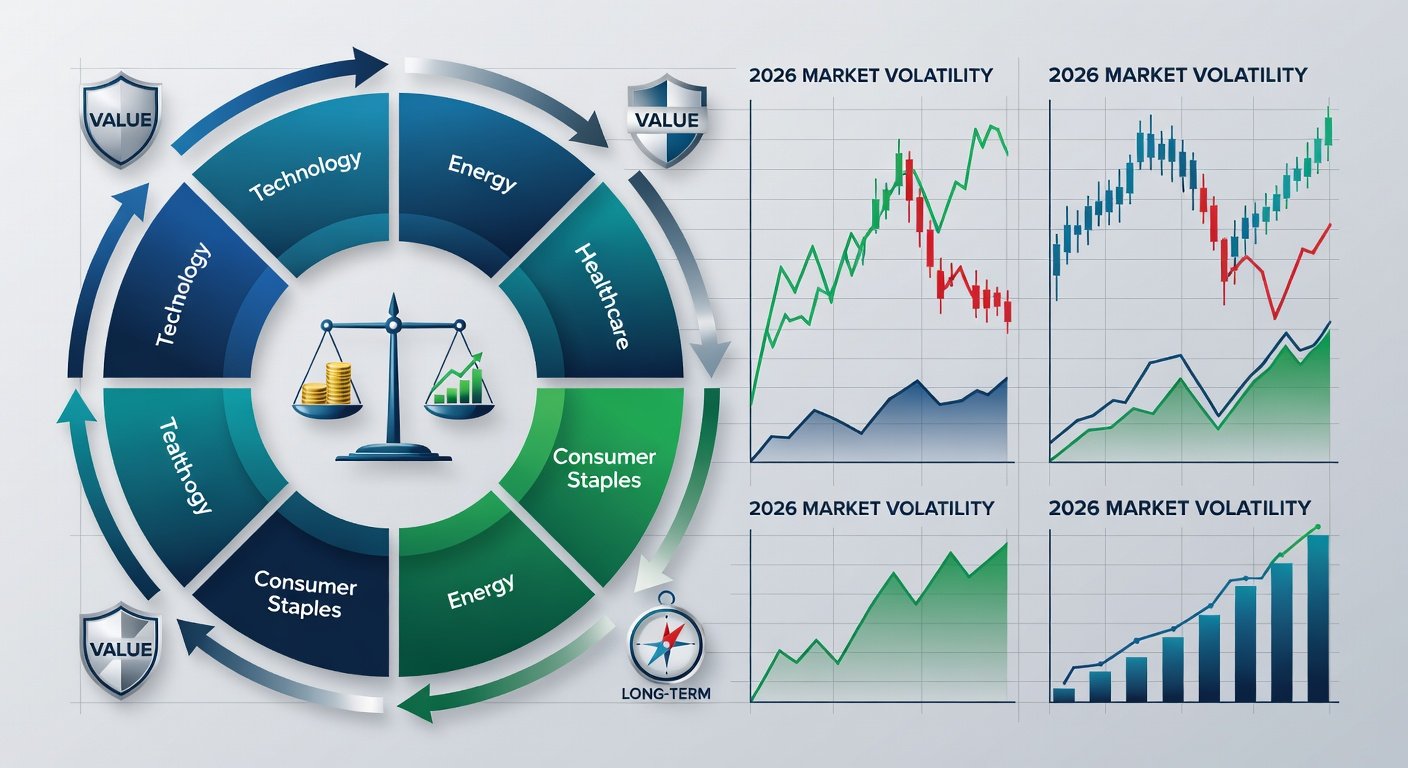
Market volatility expected throughout 2026 creates unique openings for investors who blend active management with core value principles. Sector rotation stands out as a powerful technique that moves beyond passive buy-and-hold tactics. By systematically shifting exposure across economic sectors, investors can align undervalued opportunities with favorable macroeconomic conditions. This approach helps capture rebounds in sectors temporarily out of favor while reducing prolonged exposure to underperforming areas.
Understanding Sector Rotation Fundamentals
Sector rotation is rooted in the predictable patterns of business cycles. Economies typically move through expansion, peak, contraction, and recovery phases. Each phase favors specific sectors due to changes in consumer spending, interest rates, and corporate earnings. For instance, early-cycle strength often appears in consumer discretionary and financials as borrowing costs stabilize and spending rebounds. Late-cycle leadership frequently shifts toward energy and materials when inflation pressures build.
Value investors gain an edge by applying rotation within this framework. Instead of holding static positions across all market environments, they identify sectors where valuations have compressed relative to fundamentals. This creates opportunities to purchase high-quality businesses at discounted prices before broader recognition drives prices higher. The strategy requires ongoing monitoring of cycle signals rather than set-it-and-forget-it allocation.
Why Sector Rotation Outperforms Static Value Strategies
Static value portfolios often suffer when entire sectors remain depressed for years due to structural shifts or prolonged economic weakness. Rotation addresses this limitation by actively reallocating capital toward sectors showing improving relative value. During periods of heightened volatility like those anticipated in 2026, this flexibility can preserve capital and generate excess returns. Investors avoid the drag of value traps in declining industries while participating in recoveries elsewhere.
Empirical observations show that combining value metrics with rotation timing produces better drawdown protection and smoother equity curves. The method also benefits from mean reversion tendencies, where sectors oversold on temporary news eventually normalize. Active oversight ensures positions reflect current economic realities rather than outdated assumptions from prior cycles.
Key Value Metrics for Spotting Rotations
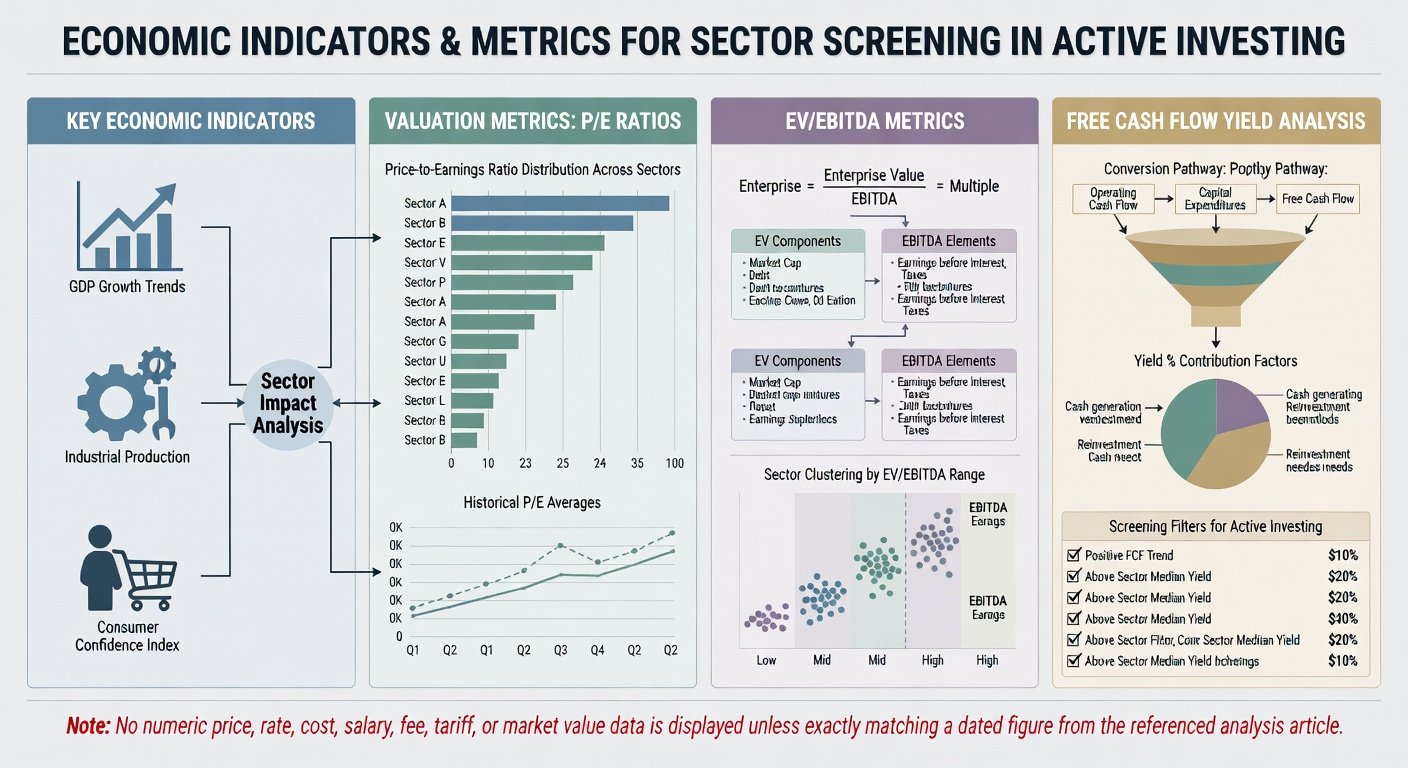
Three core metrics guide effective sector selection. The price-to-earnings ratio compares current share prices to earnings, highlighting sectors trading at discounts to historical norms or competitors. Enterprise value to EBITDA incorporates debt levels for a fuller picture of operational value. Free cash flow yield reveals how much cash a sector generates relative to its market capitalization, indicating sustainable value creation potential. Investors combine these measures in screening tools to rank sectors objectively and avoid emotional biases.
The 5-Step Sector Rotation Process
A repeatable process ensures consistency. The following steps integrate screening, analysis, execution, and review for robust implementation in 2026 conditions.
1. Sector Screening
Start with quantitative filters applied across major sectors using financial databases. Focus on identifying groups where multiple value metrics align favorably. In practice, this might flag technology hardware providers tied to AI infrastructure buildouts or renewable energy firms benefiting from policy support. Cross-reference results against sector peers to confirm relative attractiveness before deeper review.
2. Economic Indicator Analysis
Layer macroeconomic context onto the screened list. Track indicators including manufacturing output, employment trends, commodity prices, and central bank communications. For example, accelerating industrial production could support materials and industrials, while cooling inflation might benefit growth-oriented value names in healthcare. Integrate forward-looking surveys to anticipate shifts rather than reacting after the fact.
3. Position Sizing
Determine allocation sizes based on conviction, liquidity, and portfolio risk budget. Larger weights go to sectors with the strongest metric alignment and supportive indicators, while smaller satellite positions test emerging themes. Rebalance thresholds prevent any single sector from dominating overall exposure and maintain discipline during rapid market moves.
4. Monitoring and Adjustments
Establish regular review cadences tied to earnings seasons and economic data releases. Update models when new information alters relative valuations or cycle positioning. This ongoing vigilance allows timely rotation into newly attractive areas such as green tech supply chains as supply constraints ease.
5. Exit Rules
Define objective exit criteria upfront. These might include valuation multiples reaching historical averages, deterioration in free cash flow trends, or negative shifts in leading indicators. Applying rules consistently prevents holding positions past their optimal window and frees capital for the next rotation opportunity.
Real-World 2026 Examples
Consider the early-year rotation into AI infrastructure sectors. Value screens revealed attractive multiples in companies supplying specialized chips and data center components amid surging demand. Investors who executed the process captured gains as earnings growth validated the initial thesis. Another timely move involved green technology, where policy announcements and supply chain improvements created entry points in solar and battery storage firms previously overlooked by the broader market.
Rotated vs. Buy-and-Hold Value Portfolios
| Metric | Rotated Portfolio | Buy-and-Hold Value Portfolio |
|---|---|---|
| Annualized Return Profile | Captures multiple cycle upswings with active reallocation | Relies on long-term mean reversion within fixed holdings |
| Volatility Management | Reduces exposure during sector-specific downturns | Experiences deeper drawdowns when sectors lag |
| Risk-Adjusted Efficiency | Improved Sharpe ratio through tactical shifts | Lower efficiency due to static sector weights |
| Adaptability to 2026 Themes | Quickly incorporates AI and green tech opportunities | Slower to respond to emerging structural changes |
Practical Tools Checklist
- Comprehensive financial data platforms offering real-time sector valuation screens and peer comparisons.
- Economic calendars and indicator dashboards for tracking GDP, inflation, and employment releases.
- Portfolio management software with automated rebalancing alerts and position sizing calculators.
- Risk analytics tools that model sector correlations and stress-test rotation scenarios.
- News aggregation services focused on policy developments and corporate earnings in targeted sectors.
Risk Management Strategies
Effective rotation demands robust safeguards. Diversification across at least four to five sectors limits single-point failures. Stop-loss mechanisms based on percentage drawdowns or metric breaches provide mechanical exits. Stress testing portfolios against historical downturns reveals potential vulnerabilities before they materialize. Investors should also maintain cash reserves to fund new rotations without forced selling.
FAQs on Risk Management in Rotations
How do I manage downside risk during rotations? Implement predefined exit rules tied to valuation thresholds and maintain position size limits that prevent over-concentration in any single sector.
What if economic indicators give mixed signals? Begin with smaller pilot allocations in the highest-conviction names and scale up only after additional confirmation from earnings or data releases.
Can sector rotation work in all market conditions? The strategy performs especially well in volatile, range-bound environments but requires strict discipline even during strong bull markets to avoid overtrading.
How frequently should I review rotations? Align reviews with major economic releases and quarterly earnings seasons, typically resulting in adjustments every four to eight weeks depending on market pace.
Should beginners start with ETFs or individual stocks? Sector ETFs offer simpler execution and built-in diversification for those new to the approach before advancing to single-name selections.
For authoritative economic data, refer to the Federal Reserve. Additional guidance on valuation techniques appears at Investopedia.
Conclusion
Sector rotation elevates active value investing by introducing timely adaptability to traditional analysis. By mastering fundamentals, applying disciplined processes, and managing risks carefully, investors position themselves to navigate 2026 volatility with greater confidence and improved outcomes.

No comments yet. Be the first!