 Bullish Portfolio

Introduction to Active Value Investing in 2026
In today's evolving financial landscape, investors face persistent volatility driven by geopolitical shifts, technological disruption, and changing monetary policies. Building resilient portfolios requires blending the disciplined principles of value investing with the proactive oversight of active management. This approach emphasizes identifying undervalued assets while making timely adjustments to maintain long-term durability. Active value investing in 2026 focuses on hands-on analysis rather than passive indexing, helping investors weather market downturns while positioning for sustainable returns through rigorous research and adaptive strategies.
The core idea remains buying assets below their intrinsic value, yet 2026 demands integration of real-time data feeds and scenario planning. Investors who master this hybrid method often achieve better risk-adjusted outcomes compared to purely passive approaches. Federal Reserve economic data serves as a foundational resource for assessing macro conditions that influence value opportunities.
Understanding 2026 Market Conditions
Market conditions in 2026 are shaped by ongoing digital transformation, supply chain realignments, and evolving regulatory frameworks. Inflationary pressures may persist in certain sectors while deflationary risks emerge in others due to technological efficiencies. Geopolitical tensions continue to affect commodity prices and cross-border investments, requiring investors to monitor indicators like interest rate trajectories and trade policy shifts closely.
These conditions create both risks and openings for value investors willing to conduct deep due diligence. Unlike previous decades, rapid AI adoption means traditional valuation multiples must be adjusted for intangible assets such as data moats and intellectual property portfolios.
Core Principles of Value Investing Adapted for 2026
Value investing, rooted in buying assets at a discount to their true worth, remains timeless. However, 2026 conditions demand adaptations such as incorporating ESG factors, evaluating digital transformation impacts, and assessing supply chain resilience. Investors should prioritize companies with strong balance sheets, consistent cash flows, and competitive moats that can endure economic cycles. Forward-looking metrics like adjusted earnings and scenario-based valuations become essential to account for rapid innovation cycles. This adapted framework ensures portfolios remain robust amid uncertainty while still targeting genuine undervaluation.
Identifying Opportunities Across Asset Classes
Opportunities exist beyond traditional equities. In fixed income, undervalued corporate bonds from stable sectors offer attractive yields when credit spreads widen unexpectedly. Real estate investment trusts (REITs) in logistics and data centers may trade at discounts amid shifting demand patterns driven by remote work and e-commerce growth. Commodities and alternative assets like infrastructure projects provide diversification when equity valuations appear stretched. Cross-asset screening involves quantitative screens for low price-to-book ratios combined with qualitative assessments of management quality and industry tailwinds. Examining regulatory filings through SEC resources helps uncover hidden value in overlooked companies.
Dynamic Allocation Adjustments
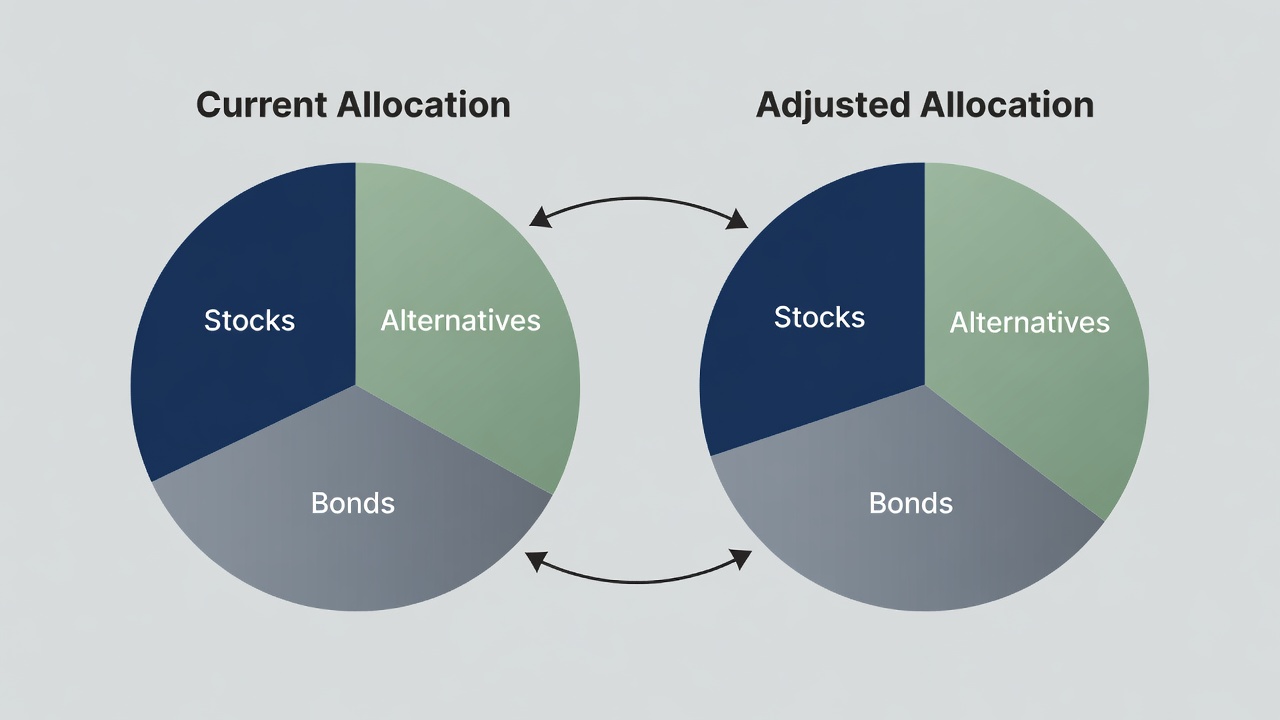
Static allocations rarely suffice in volatile environments. Active managers rebalance quarterly or in response to catalysts such as earnings surprises or regulatory changes. This might involve increasing exposure to defensive sectors during uncertainty or trimming positions when valuations normalize. Tools like tactical overlays allow for measured shifts without abandoning core value discipline. For instance, reducing international equity weightings during currency volatility can preserve capital while maintaining focus on high-conviction holdings.
Risk Management in Active Value Portfolios
Effective risk management forms the backbone of resilient portfolios. Techniques include position sizing limits, stop-loss rules based on fundamental deterioration rather than price alone, and stress testing against historical downturns. Diversification across uncorrelated asset classes reduces overall portfolio volatility. Investors should also maintain liquidity buffers to capitalize on sudden market dislocations without forced selling. Integrating macroeconomic overlays from sources like the IMF global outlook enhances preparedness for systemic events.
Step-by-Step Portfolio Building Process
- Define investment objectives and risk tolerance based on time horizon and liquidity needs, documenting specific return targets and maximum acceptable drawdowns.
- Conduct thorough fundamental analysis using discounted cash flow models, peer comparisons, and margin-of-safety calculations to establish intrinsic value ranges.
- Construct an initial allocation across 15-25 holdings to balance concentration and diversification, ensuring no single position exceeds 8-10% of total assets initially.
- Implement ongoing monitoring with alerts for material changes in business fundamentals, such as shifts in revenue quality or competitive positioning.
- Review and adjust allocations at predetermined intervals or upon significant market events, always grounding decisions in updated intrinsic value estimates.
- Document every trade rationale to facilitate later performance attribution and learning from both successes and missteps.
Performance Tracking Metrics
Effective tracking goes beyond simple returns. Investors should monitor metrics such as Sharpe ratio for risk-adjusted performance, tracking error relative to benchmarks, and drawdown duration during stress periods. Portfolio turnover rates help evaluate whether active decisions add value over time. Regular attribution analysis separates the impact of security selection from allocation decisions, revealing whether outperformance stems from genuine skill or market luck. Quarterly reviews comparing actual results against modeled scenarios refine future processes.
Real-World Case Examples and Model Comparisons
Consider a hypothetical portfolio heavy in undervalued industrial stocks that outperformed during a 2025-2026 manufacturing rebound through selective additions during dips, achieving superior downside protection via active rebalancing. In contrast, a passive value ETF lagged due to lack of timely rebalancing when sector fundamentals shifted. Another example involves a fixed-income allocation to distressed energy bonds that recovered strongly after active analysis identified temporary regulatory headwinds. Side-by-side comparisons reveal that active approaches often deliver superior downside protection when paired with rigorous research, though they require greater investor involvement and discipline.
Common Mistakes to Avoid
- Overtrading based on short-term noise instead of fundamental changes, which erodes returns through transaction costs and taxes.
- Ignoring qualitative factors like management integrity or industry disruption risks when relying solely on quantitative screens.
- Failing to maintain a margin of safety, leading to purchases that appear cheap but carry hidden leverage risks.
- Neglecting periodic independent reviews of portfolio holdings, allowing biases to influence ongoing decisions.
Conclusion
Active value investing offers a robust framework for 2026 by emphasizing discipline, adaptability, and deep analysis. Investors who commit to these methods can build portfolios capable of withstanding turbulence while capturing opportunities in undervalued areas.
FAQ
How often should I rebalance an active value portfolio?
Quarterly reviews are typical, with adjustments triggered by fundamental changes rather than short-term price movements to avoid unnecessary costs.
What challenges arise when executing this strategy?
Behavioral biases and information overload can hinder decisions; maintaining a structured process and using checklists mitigates these issues effectively.
How can long-term optimization be achieved?
Focus on continuous education, periodic third-party audits of holdings, and alignment with evolving personal goals while tracking key performance metrics consistently.
Is active value investing suitable for beginners?
While accessible, it demands significant time commitment; beginners may start with smaller allocations and gradually build expertise through practice and study.


No comments yet. Be the first!