 Bullish Portfolio
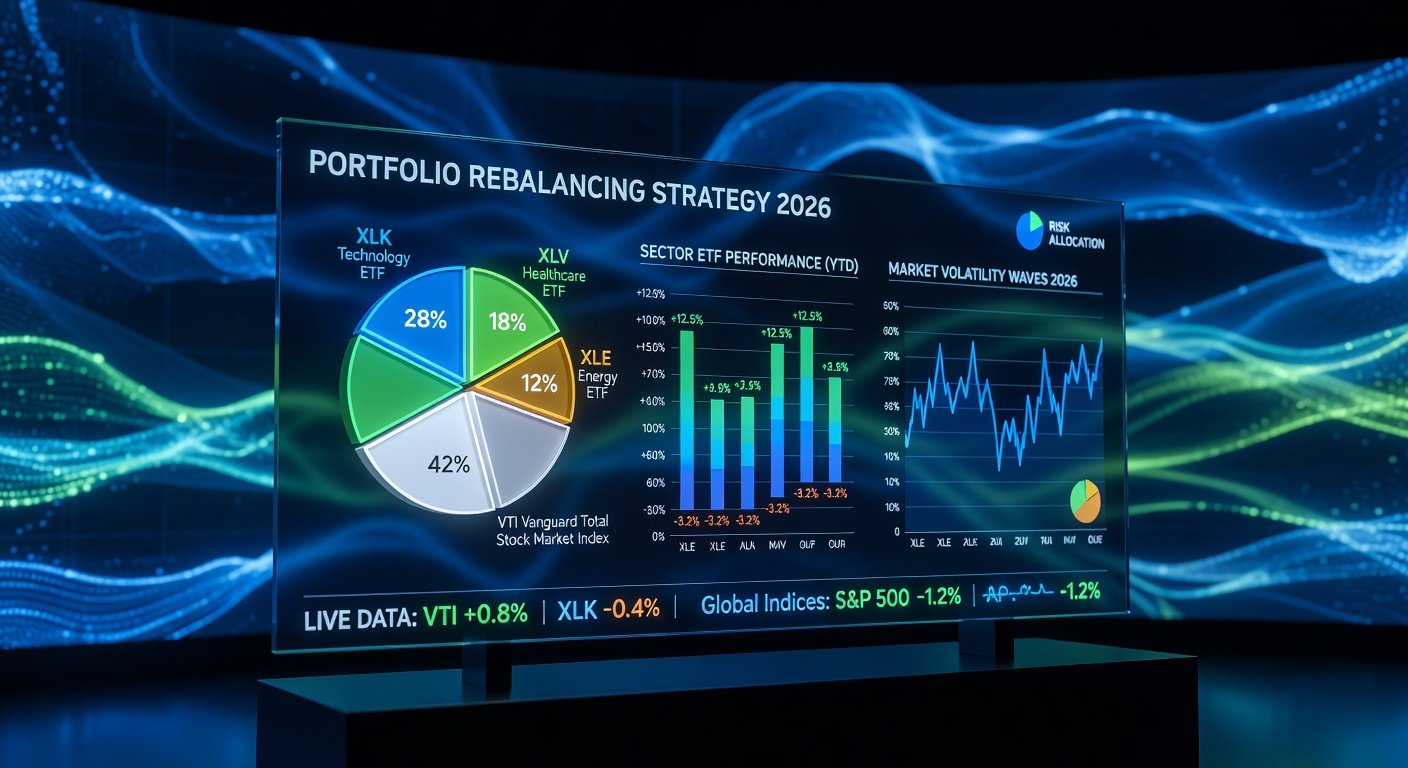
Why Rebalance Your Portfolio in 2026?
As we approach 2026, market volatility is expected to surge due to economic shifts like fluctuating interest rates, AI-driven sector booms, geopolitical tensions, and potential recessions. Blending sector ETFs and broad index funds helps maintain diversification and risk-adjusted returns. Rebalancing restores your target asset allocation, selling winners and buying underperformers to capitalize on mean reversion.
Historical data shows rebalanced portfolios outperform buy-and-hold by 1-2% annually over decades. With tools like automated platforms, it's easier than ever. This guide walks you through the process, real-world ETF examples, pitfalls, and automation strategies.
Step-by-Step Guide to Rebalancing
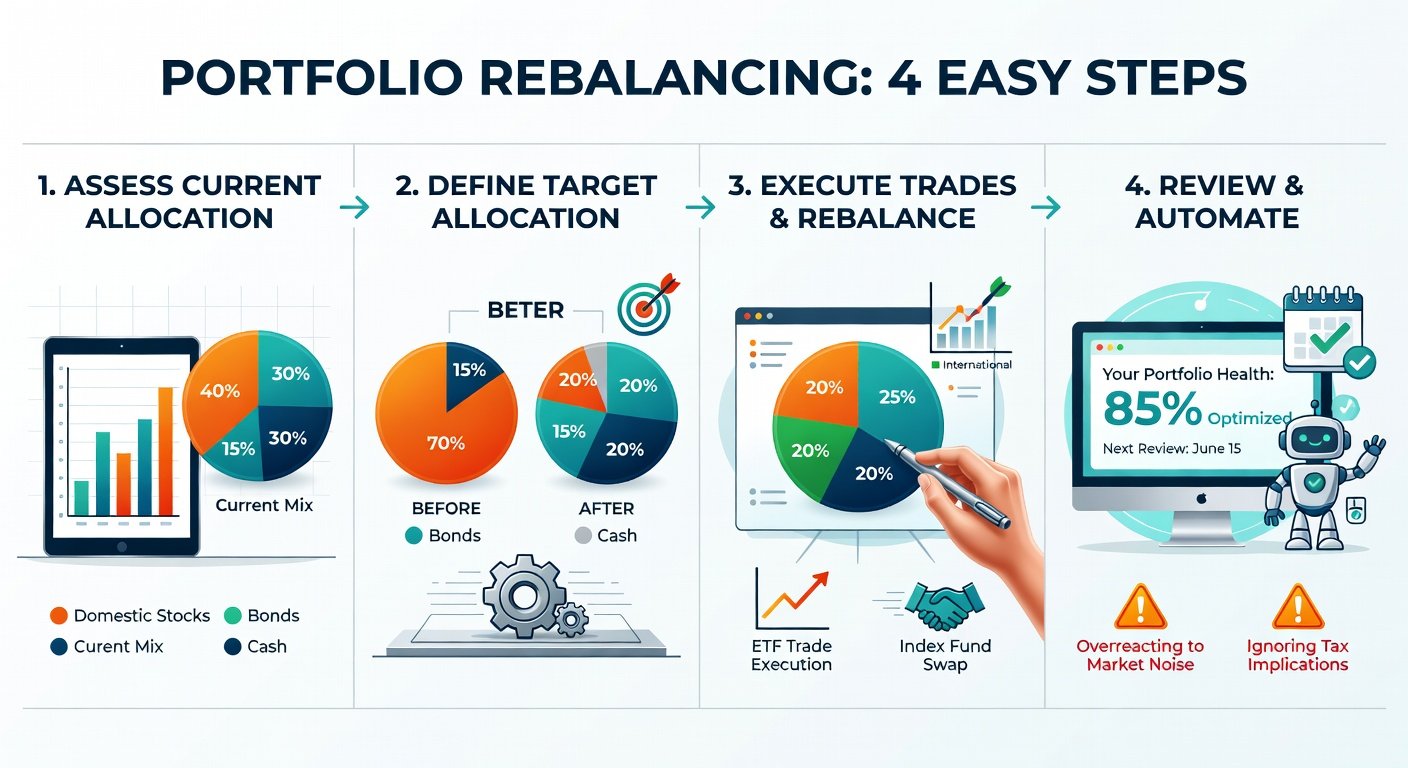
- Assess Your Current Allocation: Review your portfolio's drift. Use a spreadsheet or brokerage tool to calculate percentages in stocks, bonds, sectors. Aim for thresholds like 5-10% deviation before rebalancing.
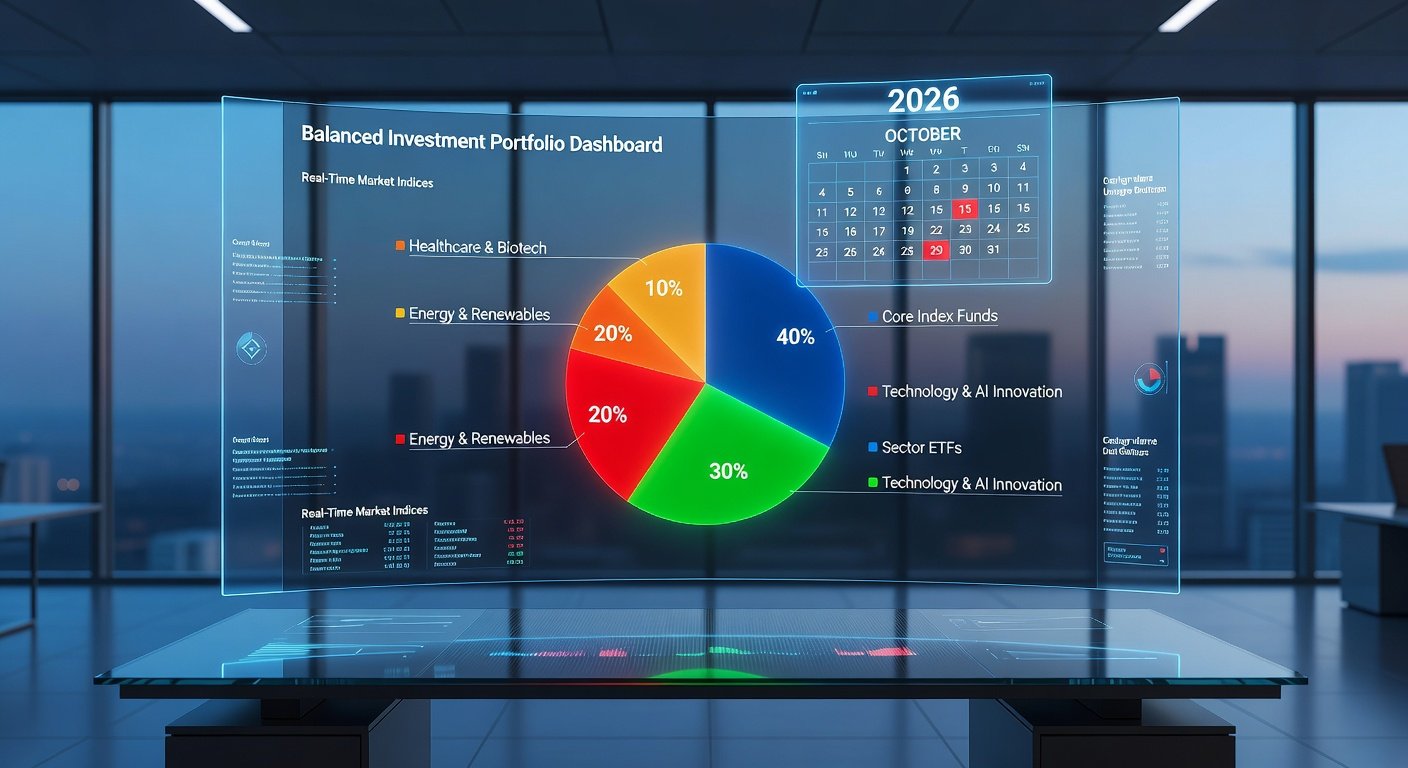
- Define Your Target Allocation: For moderate risk, consider 60% equities (40% broad index funds, 20% sector ETFs), 40% bonds. Adjust for age and goals—younger investors tilt toward growth sectors.
- Select Best ETFs and Index Funds: Choose low-cost, liquid options. Blend broad exposure with targeted sectors.
- Execute Trades: Sell overweight assets, buy underweight. Use limit orders to minimize slippage.
- Rebalance Frequency: Quarterly or annually, or threshold-based to avoid over-trading.
- Tax Considerations: Use tax-advantaged accounts like IRAs first. Harvest losses in taxable accounts.
Real-World ETF Examples for 2026
For broad index funds: Vanguard Total Stock Market ETF (VTI) or S&P 500 ETF (VOO) provide U.S. equity core. Expense ratios under 0.04% make them ideal anchors.
Sector ETFs to blend: Technology (XLK) for AI growth; Energy (XLE) amid energy transitions; Healthcare (XLV) for aging demographics. Example portfolio: 30% VTI, 10% XLK, 10% XLE, 10% XLV, 20% international (VXUS), 20% bonds (BND).
In 2023 volatility, a rebalanced VTI/XLK/BND mix beat S&P by 3%. For 2026, overweight defensive sectors if recession looms.
Check authoritative resources like Vanguard Investor for ETF details.
Common Pitfalls to Avoid
- Emotional Trading: Don't chase hot sectors—rebalancing forces discipline.
- High Fees: Stick to ETFs with <0.2% expense ratios; avoid leveraged ones for long-term holds.
- Over-Diversification: Too many sectors dilute returns; limit to 5-7 ETFs.
- Ignoring Taxes: Rebalancing in taxable accounts can trigger capital gains—use ETF tax efficiency (in-kind redemptions).
- Timing the Market: Rebalance on schedule, not predictions.
The SEC emphasizes disciplined strategies in their investor education resources.
Tools for Automated ETF Investing Strategies
Manual rebalancing suits DIY investors, but automation scales better:
- Robo-Advisors: Betterment or Wealthfront auto-rebalance ETF portfolios for 0.25% fees. Set targets; they handle drifts.
- Brokerage Features: Vanguard Digital Advisor or Fidelity Go offer ETF-based automation with human oversight.
- Portfolio Trackers: Personal Capital (now Empower) alerts on drifts; integrates with 10,000+ accounts.
- Excel/Google Sheets: Free templates with formulas for allocation checks.
- APIs for Pros: Use Python with yfinance for custom bots, but start simple.
For ETF research, visit Morningstar ETFs.
2026-Specific Considerations
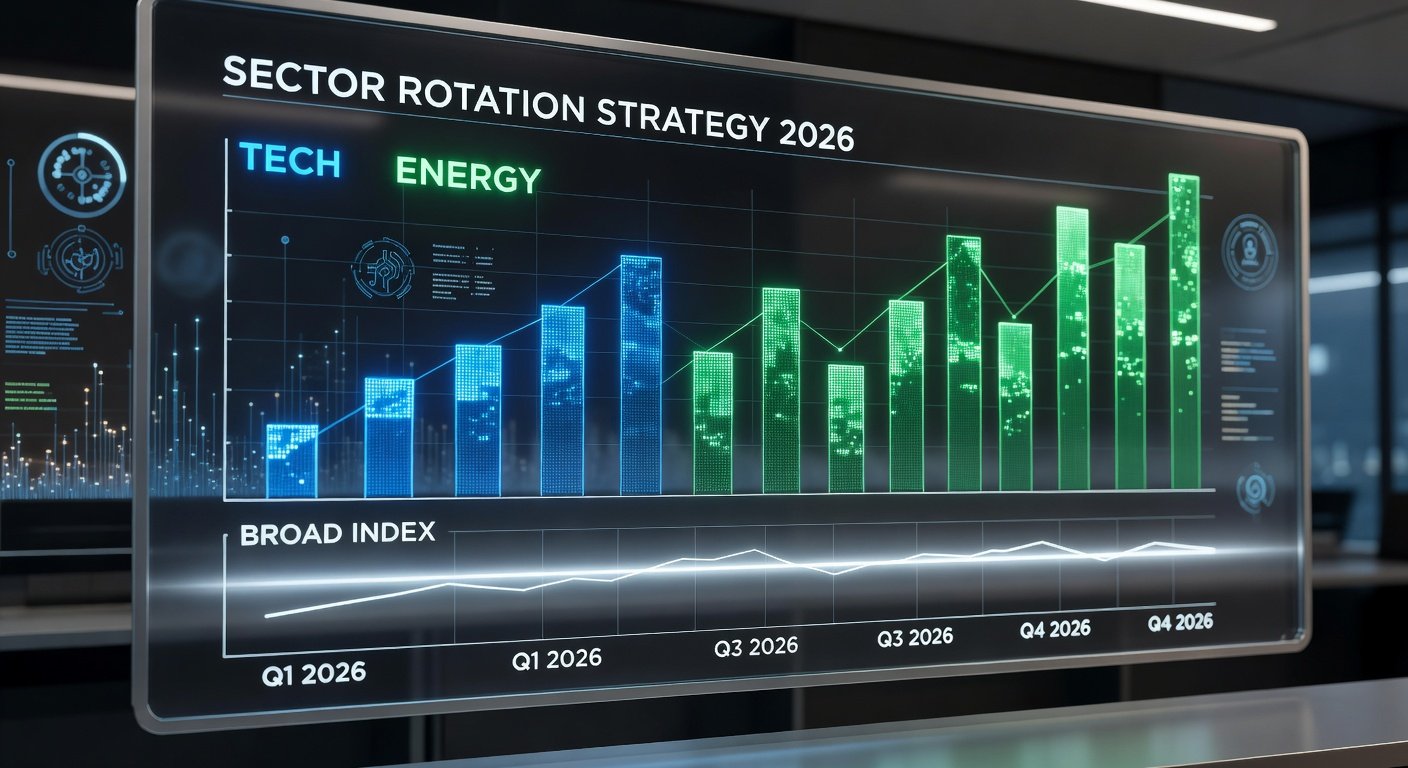
Anticipate volatility from Fed policy shifts, China trade, and tech bubbles. Stress-test via backtesting tools—simulate 20% sector drops. Tilt toward resilient ETFs like consumer staples (XLP) or utilities (XLU). International diversification via VXUS hedges U.S.-centric risks.
Example: Investor with $100K portfolio drifted to 70% equities. Rebalance sells $10K VTI, buys $10K BND—locking gains, reducing risk.
Conclusion: Start Rebalancing Today
Rebalancing sector ETFs and index funds positions you for 2026's uncertainties while compounding wealth. Implement quarterly checks, leverage automation, and stay diversified. Consistent action beats perfect timing—your future self will thank you.
No comments yet. Be the first!