 Bullish Portfolio

Introduction to Semiconductor Growth in 2026
The semiconductor sector continues its strong momentum into 2026, fueled by surging demand across artificial intelligence, electric vehicles, and next-generation wireless infrastructure. Investors seeking high-potential bullish opportunities are turning to leading chipmakers with robust earnings forecasts and dominant market positions. This guide examines key trends, highlights eight standout stocks, and provides practical tools for navigating the landscape.
Key Sector Trends Driving the Bull Run
Explosive growth in AI training and inference workloads requires advanced chips with higher performance and efficiency. Electric vehicle adoption accelerates the need for power semiconductors and specialized processors, while 5G networks evolve toward 6G, demanding cutting-edge RF and connectivity solutions. These macro drivers support sustained revenue expansion for well-positioned companies.
Supply chain resilience improvements and onshoring initiatives in the United States and Europe further bolster long-term stability. For authoritative industry data, refer to the Semiconductor Industry Association.
Top 8 Bullish Semiconductor Picks for 2026
Here are eight leading companies with strong competitive advantages and favorable growth outlooks:
- NVIDIA (NVDA) – Dominant in AI GPUs with accelerating data center revenue.
- TSMC (TSM) – The world’s leading foundry benefiting from broad customer demand.
- Broadcom (AVGO) – Diversified portfolio in networking and custom AI chips.
- AMD – Gaining share in CPUs, GPUs, and data center accelerators.
- ASML – Monopoly on extreme ultraviolet lithography equipment essential for advanced nodes.
- Qualcomm (QCOM) – Leader in mobile and automotive semiconductors.
- Micron (MU) – High-bandwidth memory solutions critical for AI applications.
- Intel (INTC) – U.S. manufacturing push and foundry ambitions creating turnaround potential.
Each pick shows attractive valuation metrics relative to projected earnings growth and solid revenue trajectories supported by secular tailwinds.
Stock Analysis and Key Metrics
Investors evaluate these names using forward P/E ratios, year-over-year revenue growth expectations, and gross margin trends. Companies with exposure to AI infrastructure typically command premium multiples yet deliver above-average growth. Revenue forecasts for the group remain constructive through 2026, driven by capacity expansions and new product cycles.
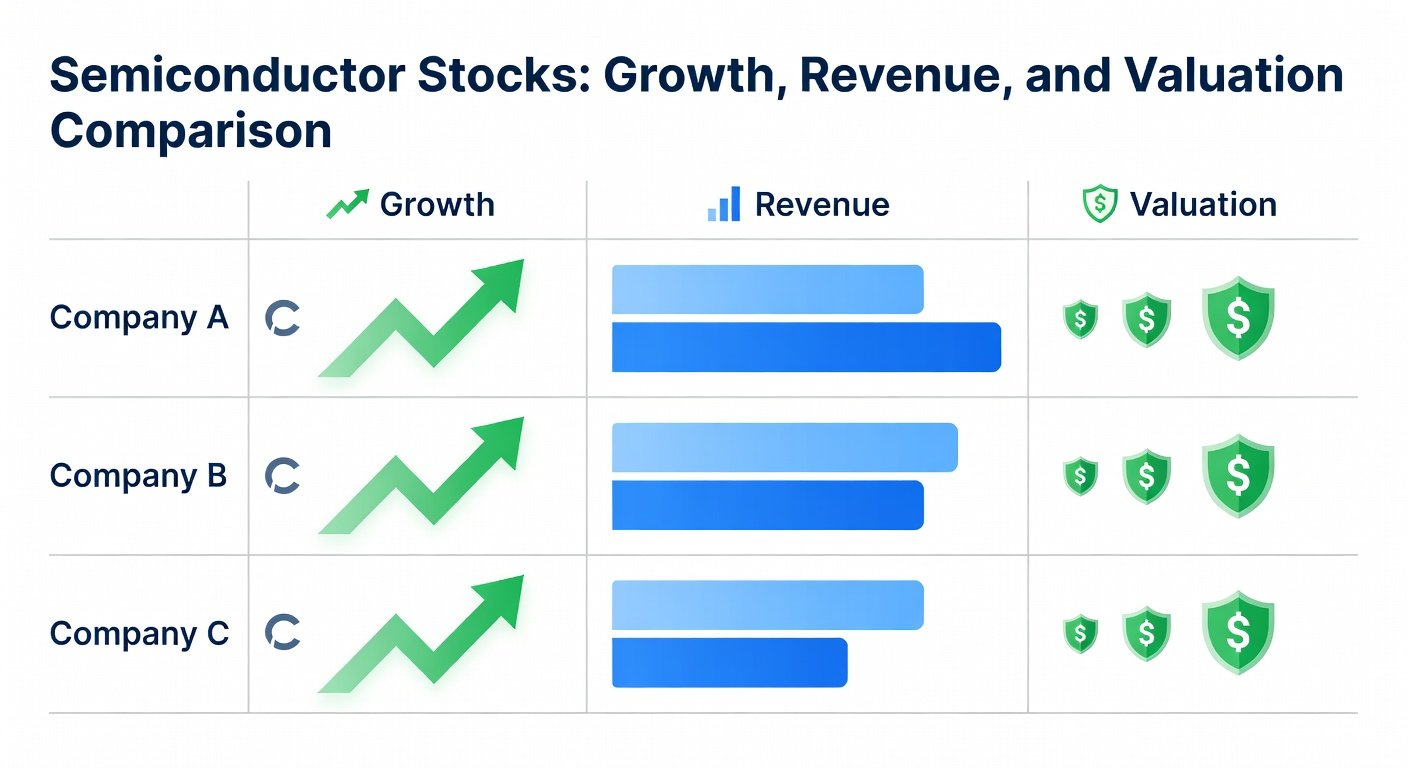
Comparison Table: Picks vs. Benchmarks
| Stock | Projected Revenue Growth (2026) | Relative Valuation | Market Position |
|---|---|---|---|
| NVDA | Strong double-digit | Premium to sector | AI leader |
| TSM | High single-digit | Moderate | Foundry leader |
| AVGO | Double-digit | Attractive | Broad portfolio |
| Sector ETF (SMH) | Mid single-digit | Baseline | Diversified exposure |
Risk Factors to Consider
Despite optimistic projections, investors must account for geopolitical tensions affecting Taiwan, ongoing supply chain complexities, cyclical inventory corrections, and rapid technological shifts. Regulatory scrutiny on advanced chip exports also remains a variable. Diversification and position sizing help mitigate these exposures.
Investment Steps for Beginners
- Define your risk tolerance and time horizon aligned with 2026 volatility expectations.
- Research each company’s latest earnings reports and forward guidance.
- Compare valuations against sector benchmarks using reliable financial platforms.
- Consider dollar-cost averaging to manage entry timing.
- Monitor macroeconomic indicators such as interest rates and trade policy.
- Consult a financial advisor before committing capital.
FAQ: Timing Entries Amid 2026 Volatility
When is the best time to enter semiconductor stocks? Focus on periods following earnings releases or sector pullbacks rather than attempting to time exact bottoms.
Should beginners buy individual stocks or ETFs? Start with a broad semiconductor ETF for diversification before adding single names.
How do geopolitical risks affect timing? Maintain a long-term perspective and use volatility as an opportunity to accumulate quality positions gradually.
Conclusion
The semiconductor sector offers compelling growth potential in 2026 for investors positioned in leading companies. By understanding demand drivers, evaluating key metrics, and following structured investment steps, market participants can pursue bullish opportunities while managing inherent risks effectively. Always conduct thorough due diligence and stay informed through trusted sources such as Investopedia.


No comments yet. Be the first!