 Bullish Portfolio
Introduction to Senior Care Stocks in 2026
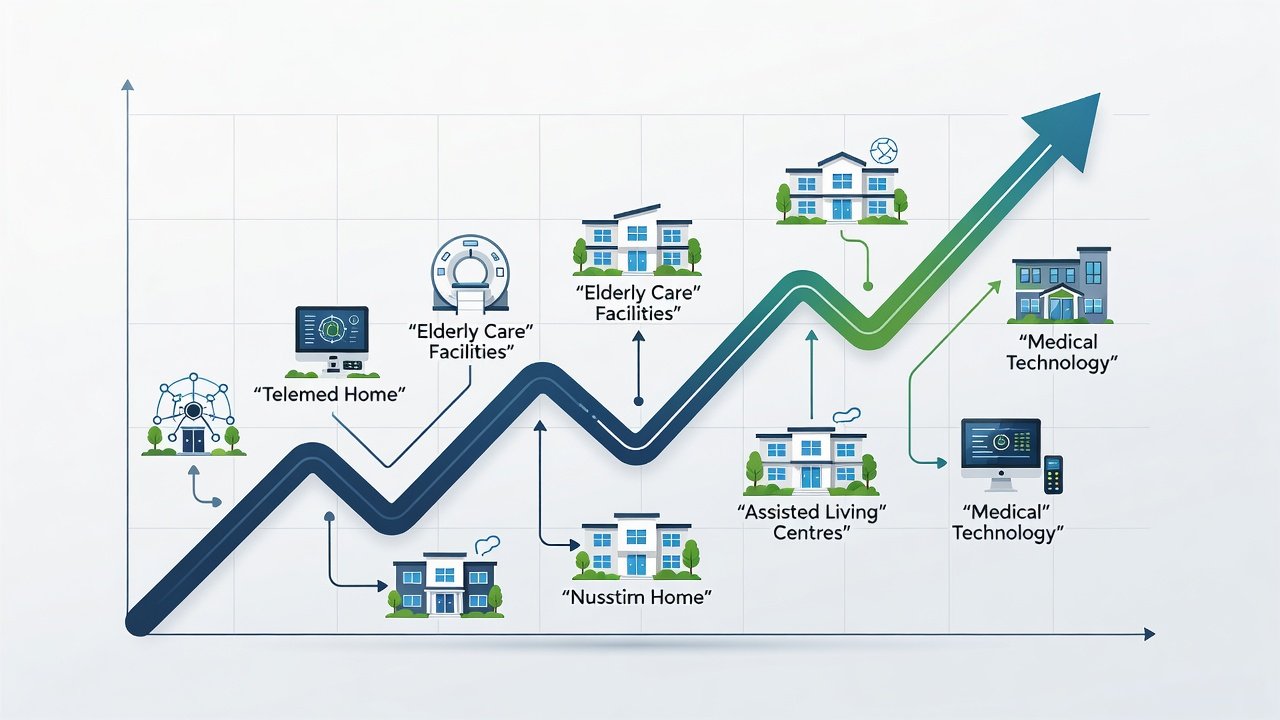
The senior care sector stands at the forefront of investment opportunities in 2026, propelled by an unprecedented wave of demographic changes and supportive policy environments. As populations age rapidly across developed nations, demand surges for assisted living facilities, home health services, hospice care, and integrated medical technologies tailored to older adults. This beginner-friendly guide delves deeply into the bullish prospects for stocks in this space, providing actionable insights beyond surface-level overviews. Investors targeting growth in eldercare will find analysis of market drivers, detailed company profiles, evaluation frameworks, and answers to pressing questions about portfolio construction. The sector benefits from both structural tailwinds and innovation, making it attractive for those seeking long-term returns amid broader market volatility.
Key Drivers Fueling Growth in the Senior Care Sector
Multiple interconnected factors are accelerating expansion in senior care. Demographic shifts form the bedrock, with millions more individuals entering retirement age each year and requiring sustained support services. Regulatory tailwinds, such as expanded reimbursement models and incentives for community-based care, reduce barriers for providers. Technology integration further amplifies potential by streamlining operations and enabling scalable solutions like remote patient monitoring. These elements combine to create a robust environment for revenue growth and margin improvement among leading firms.
Demographic Trends and Their Impact
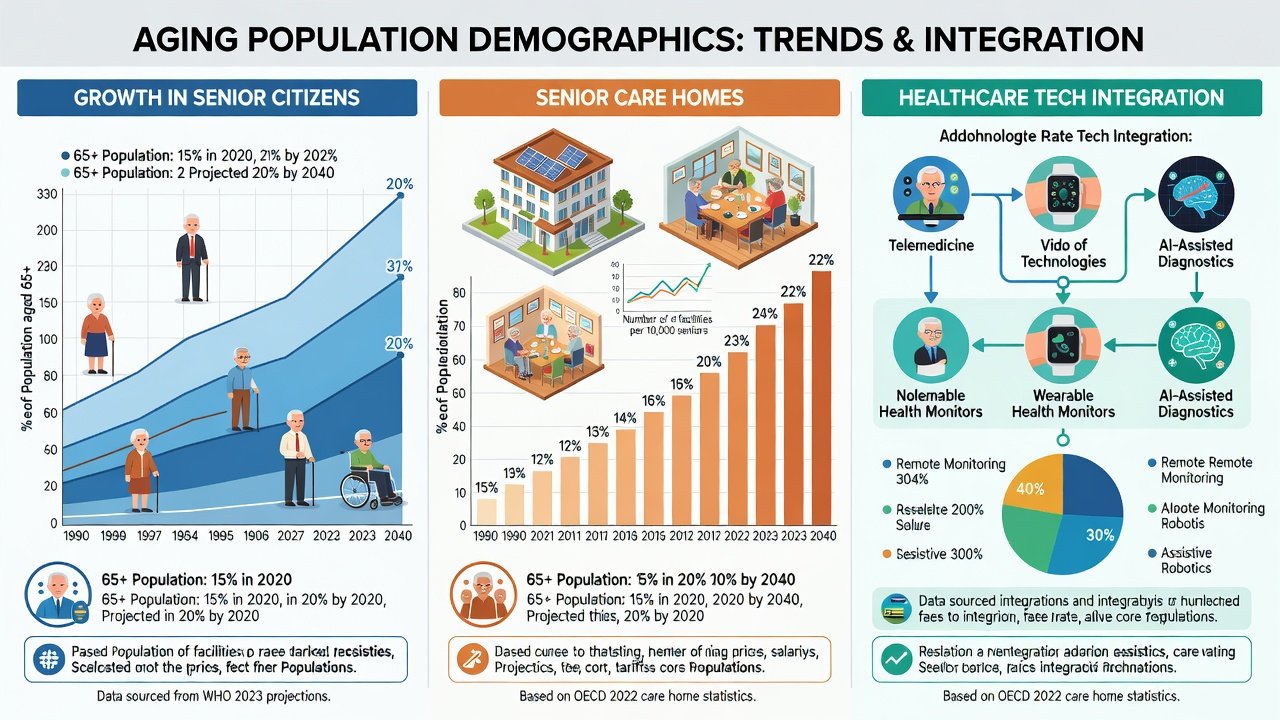
The aging of the baby boomer generation continues to reshape healthcare economics. By 2026, the proportion of the population over 65 is expected to reach new highs in the United States and similar developed markets, driving consistent demand for housing options, chronic condition management, and daily assistance programs. This trend translates into predictable revenue streams for companies positioned in high-occupancy segments. For instance, increased prevalence of conditions like dementia and mobility issues necessitates specialized facilities and trained staff, creating opportunities for operators who can scale efficiently while maintaining quality standards.
Regulatory Tailwinds and Policy Support
Government initiatives emphasize value-based care and home health expansion, which favor established providers with compliance expertise. Recent adjustments to Medicare frameworks encourage preventive services and coordinated care, benefiting firms that integrate technology for outcome tracking. These policies not only stabilize cash flows but also open avenues for new service lines, such as telehealth-enabled follow-ups that reduce hospital readmissions and align with payer incentives.
Technology Integration in Eldercare
Advancements in artificial intelligence, wearable sensors, and electronic health records are transforming service delivery. Companies adopting these tools can lower operational costs, improve patient outcomes, and differentiate themselves competitively. Remote monitoring platforms, for example, allow real-time intervention, reducing emergency visits and enhancing satisfaction scores that influence reimbursement rates. This tech layer adds a growth multiplier to traditional care models.
Top Bullish Senior Care Stocks for 2026
Selecting individual stocks requires examining business models, competitive advantages, and external risks. The following seven examples represent a cross-section of the sector, each with distinct growth narratives supported by operational scale and strategic positioning.
- Brookdale Senior Living (BKD): Specializes in assisted living and memory care communities. Growth potential arises from occupancy rebounds and targeted expansions in high-demand regions. Financial metrics highlight improving operating margins through cost controls, though risks include regional real estate fluctuations and workforce availability challenges.
- Amedisys (AMED): Focuses on home health and hospice services with a strong emphasis on personalized care pathways. Revenue growth is supported by referral networks and geographic coverage. Key strengths include consistent free cash flow generation, offset by potential shifts in Medicare reimbursement policies.
- Humana (HUM): Provides Medicare Advantage insurance products tailored to seniors, complemented by integrated care offerings. Expansion potential stems from membership gains and digital tools for claims management. Risks center on regulatory scrutiny of plan designs and competitive pricing pressures.
- UnitedHealth Group (UNH): Leverages its Optum division for senior-focused services alongside broad insurance operations. Scale provides diversification benefits and data-driven insights for care optimization. Metrics reflect resilient earnings across cycles, with exposure to policy changes as a primary risk factor.
- Genesis Healthcare: Operates skilled nursing facilities with an emphasis on rehabilitation services. Recovery in patient volumes supports upside potential through operational streamlining. Challenges involve staffing costs and evolving state-level regulatory requirements.
- Chemed Corporation (CHE): Runs the VITAS hospice network alongside home health operations. Stable demand in end-of-life care underpins performance consistency. Local market competition represents the main risk alongside reimbursement variability.
- LHC Group: Delivers home health services with an active acquisition strategy for market share gains. Geographic diversification strengthens its profile, supported by disciplined capital allocation. Integration risks from deals and payer mix changes warrant monitoring.
Practical Steps for Evaluating Senior Care Stocks
Effective stock selection combines quantitative analysis with qualitative assessment. Start by reviewing quarterly earnings for year-over-year revenue growth, gross margins, and return on invested capital. Assess balance sheet strength through metrics like current ratio and long-term debt levels to gauge resilience. Incorporate technical analysis by plotting 50-day and 200-day moving averages to confirm uptrends, while using the relative strength index to avoid entries during extreme overbought conditions. Compare forward price-to-earnings multiples against industry averages for valuation context. Supplement with macro indicators from sources like the U.S. Census Bureau, tracking population projections and healthcare spending forecasts. Build positions gradually via dollar-cost averaging, and maintain diversification by allocating across at least three sub-sectors such as home health, senior housing, and insurance. Rebalance annually or after major earnings events, and set stop-loss thresholds based on support levels identified in weekly charts. Consult recent 10-K filings available through the U.S. Securities and Exchange Commission for detailed risk disclosures before committing capital.
Risks and Mitigation Strategies
While prospects appear strong, investors must account for sector-specific vulnerabilities. Reimbursement rate adjustments by government payers can compress margins unexpectedly. Labor shortages and rising wage pressures affect staffing models across facilities. Economic slowdowns may delay moves into senior housing. Mitigation involves favoring companies with multiple revenue sources, robust cash reserves, and proven management teams experienced in navigating policy shifts. Regular portfolio reviews and hedging with broader healthcare ETFs can further limit downside exposure.
FAQ: Common Questions on Senior Care Stock Investing in 2026
How should investors approach diversification in this sector?
Spread holdings across home health providers, assisted living operators, and Medicare-focused insurers to balance cyclical and structural risks. Aim to cap sector exposure at 10-15 percent of total equity allocation while monitoring correlations with the broader market.
When is the best time to enter positions in 2026?
Look for entry opportunities following earnings releases that beat expectations or after favorable regulatory announcements. Employ dollar-cost averaging over several months to smooth volatility and reduce the impact of short-term price swings.
Are there tax considerations for these stocks?
Many senior care companies pay dividends that may qualify for preferential tax rates in taxable accounts. Holding positions in retirement accounts like IRAs can defer taxes on gains, and investors should review qualified dividend status with a tax professional.
What role does technology play in long-term stock performance?
Firms investing in remote monitoring and data analytics often achieve higher margins and patient retention. Tracking capital expenditure on technology in annual reports helps identify leaders likely to outperform peers over multi-year horizons.
Conclusion
The senior care sector presents compelling growth avenues for 2026 through the convergence of demographics, supportive regulations, and technological progress. By thoroughly analyzing highlighted companies and applying disciplined evaluation techniques, investors can construct positions aligned with both opportunity and risk management principles. Staying informed through authoritative data sources ensures decisions remain grounded in current realities rather than speculation.

No comments yet. Be the first!