 Bullish Portfolio

Introduction to Factor-Based Investing
Factor-based approaches offer investors a systematic way to integrate the flexibility of active management with the disciplined foundation of value investing. By focusing on measurable characteristics such as quality and low volatility, these methods help refine stock selection and portfolio allocation for improved risk-adjusted outcomes over time. Traditional value investing emphasizes buying undervalued securities based on fundamental metrics like earnings multiples and book value. Active strategies add layers of research and timing. Factor investing bridges both by quantifying elements that drive returns, allowing data-driven decisions rather than pure intuition. This approach appeals to investors seeking refinements beyond basic stock picking, particularly those aiming for consistent long-term results in volatile markets.
In recent years, factor-based blending has gained traction as markets have shown that pure value strategies can underperform during growth-led periods, while unchecked active management often incurs high costs without proportional gains. By layering factors, portfolios can capture value opportunities while mitigating risks through quality screens and volatility controls. This creates a hybrid model that adapts to different economic cycles without relying solely on manager discretion.
Key Factors: Quality and Low Volatility
Quality factors identify companies with strong balance sheets, consistent profitability, and efficient operations. Metrics include return on equity above industry averages and low debt-to-equity ratios. Low-volatility factors target stocks with smaller price swings, reducing portfolio drawdowns during market stress. Additional relevant factors for blending include momentum, which captures short-term price trends, and size, which favors smaller companies that historically deliver premiums. When combined with value, these create robust screens that avoid common pitfalls like value traps where cheap stocks remain depressed due to poor fundamentals.
Practical examples illustrate the power of these factors. Consider screening for firms with high free cash flow yields alongside stable earnings growth; such stocks often weather recessions better than pure value plays. Low-volatility integration further smooths returns by overweighting defensive sectors like utilities and consumer staples during uncertain times. Investors should regularly update factor definitions using current financial data to reflect evolving market conditions.
Step-by-Step Portfolio Construction
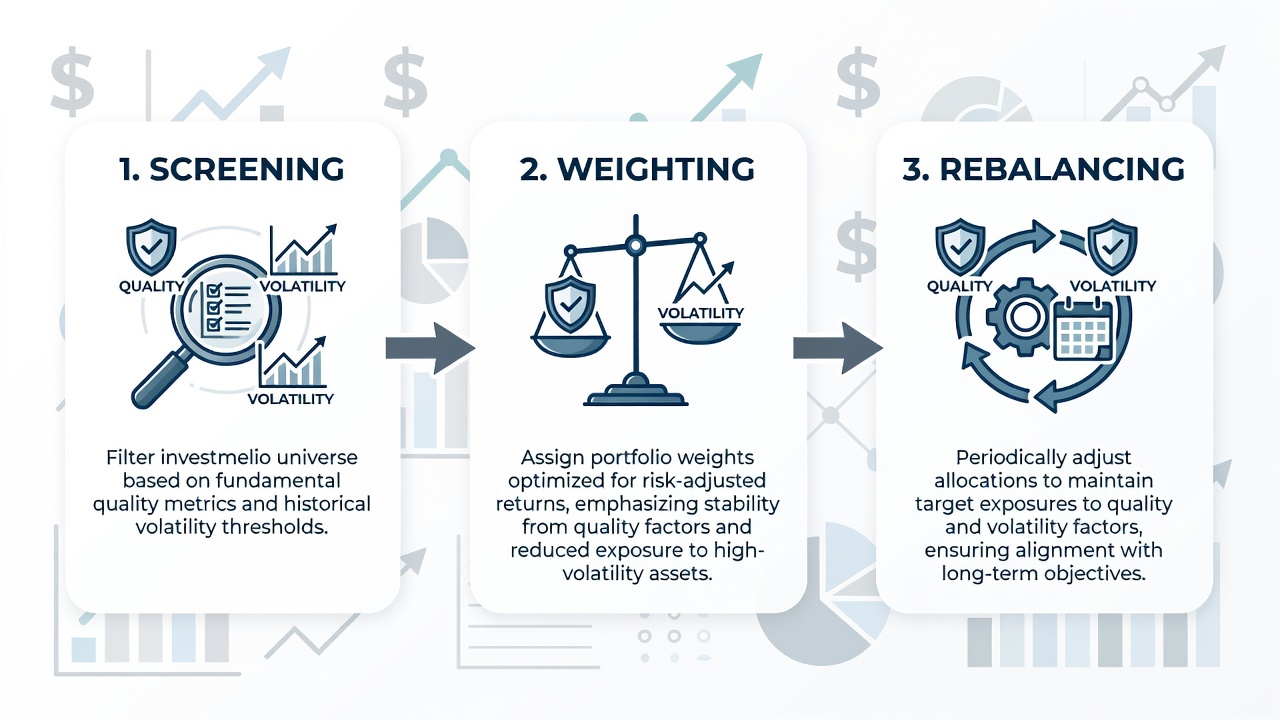
Building a factor-based portfolio begins with defining objectives and risk tolerance. Next, select a universe of stocks, typically large-cap equities for liquidity. Apply multi-factor screens using quality scores, value ratios, and volatility measures. The process involves ranking securities by combined factor scores, optimizing weights to balance exposure, rebalancing quarterly to maintain targets while minimizing turnover, and monitoring correlations to avoid unintended concentration.
Real-world examples demonstrate effectiveness. An investor might start with a broad index, apply a value screen for price-to-book ratios below the median, then overlay quality metrics like consistent dividend growth over five years. Weights are then adjusted using optimization software to limit any single factor's dominance. Checklists ensure consistency: verify data sources for accuracy, backtest factor combinations over multiple market cycles, and stress-test against scenarios like rising interest rates or inflation spikes.
- Define clear investment goals and constraints upfront.
- Gather reliable data from audited statements and market feeds.
- Run initial screens and review top candidates manually for qualitative fit.
- Implement position sizing rules to cap individual holdings at 5 percent.
- Schedule regular reviews to adapt to new economic data.
Performance Comparisons and Risk-Adjusted Analysis
Historical comparisons show factor blends often outperform pure value or active strategies on a risk-adjusted basis. Metrics such as Sharpe ratios and maximum drawdowns highlight the benefits of lower volatility alongside value exposure. In practice, blended portfolios have demonstrated resilience by limiting losses in downturns while participating in recoveries through undervalued quality names.
Case studies from recent markets, including the 2022-2023 period of high inflation and rate hikes, reveal how quality and low-volatility overlays helped value-tilted portfolios avoid severe drawdowns seen in unfiltered active selections. Risk-adjusted returns improve because factors reduce correlation to broad market swings. Investors can track these metrics using standard portfolio analytics tools to compare against benchmarks like the S&P 500.
Real-World Implementation Challenges and Solutions
Implementing factor-based strategies requires attention to data quality and transaction costs. Common hurdles include factor decay over time and changing market regimes that diminish certain premiums. Solutions involve diversification across multiple factors and periodic model recalibration. Tools range from spreadsheet-based screens to professional platforms that automate rebalancing.
Another practical aspect involves tax efficiency. Holding periods should align with long-term capital gains treatment where possible, and turnover should stay controlled. Case examples show that investors who combine factor tilts with broad market exposure achieve smoother equity curves compared to concentrated active bets.
Conclusion and Next Steps
Factor-based methods provide a powerful framework for blending active and value investing. By systematically incorporating quality, low volatility, and related characteristics, investors gain tools for superior long-term outcomes with managed risk. Start small by testing screens on paper, then scale with real capital while tracking results against benchmarks. Ongoing education and disciplined execution remain essential for success.
For further reading on regulatory frameworks, visit the U.S. Securities and Exchange Commission and the Federal Reserve.
Frequently Asked Questions
How often should factors be re-evaluated? Quarterly reviews align with earnings seasons while controlling costs and allowing timely adjustments.
What data sources support factor analysis? Reliable inputs come from audited financials and established market databases that provide consistent historical coverage.
Can retail investors apply these methods? Yes, using screening tools and low-cost index products that embed factor exposures for simplified access.
What are common mistakes to avoid? Overfitting models to past data and ignoring transaction costs can erode advantages; always validate with out-of-sample testing.
How does this approach handle market regime shifts? Multi-factor diversification helps, but investors should monitor economic indicators and adjust weights accordingly.

No comments yet. Be the first!