 Bullish Portfolio

Investors today increasingly seek tailored approaches that combine the strengths of active management with the discipline of value investing principles. This comprehensive guide explores actionable ways to merge these strategies for custom portfolios that adapt to individual goals, risk tolerances, and evolving market conditions. By integrating opportunistic stock picking with a focus on undervalued assets, investors can build resilient portfolios designed for both growth and capital preservation over the long term.
Understanding the Blend of Active and Value Investing
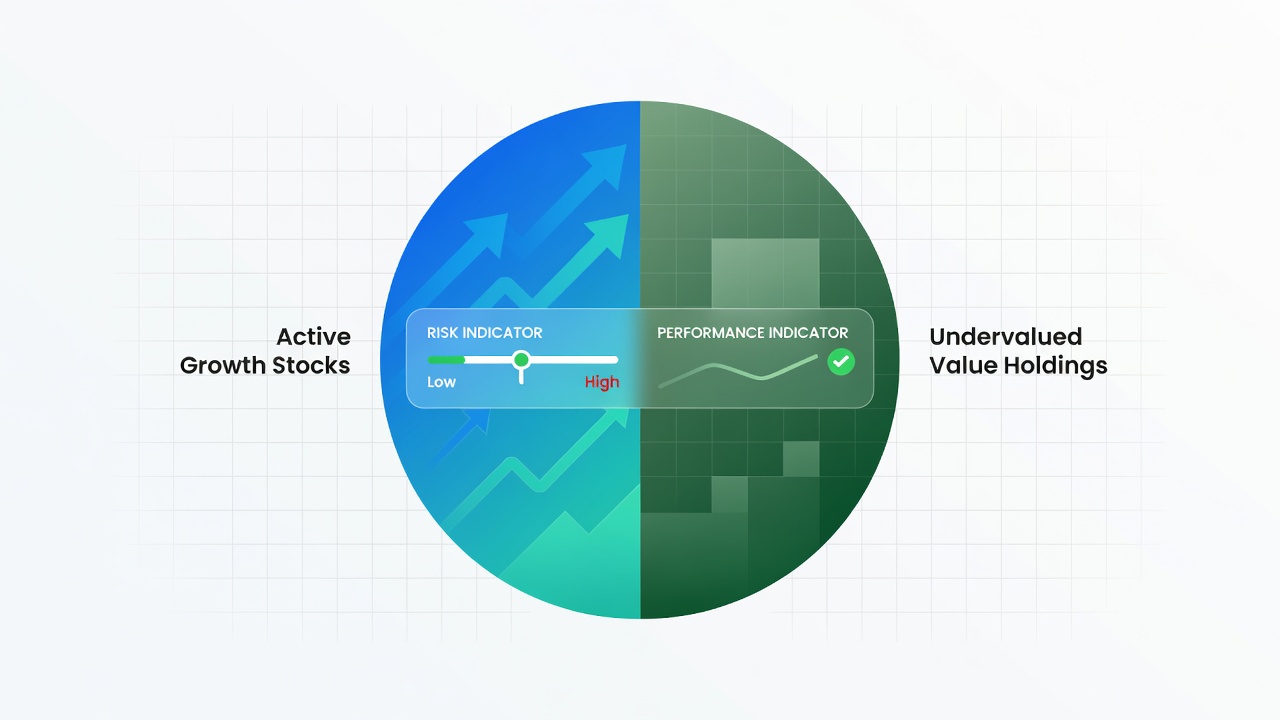
Active investing centers on selecting individual securities expected to outperform broad market benchmarks through intensive research, market timing, and ongoing analysis. In contrast, value investing emphasizes purchasing assets that trade below their intrinsic worth, determined through rigorous fundamental evaluation of financial statements, competitive positioning, and economic moats. When these methodologies are thoughtfully combined, the result is a hybrid strategy that captures upside potential from active decisions while grounding the portfolio in securities offering a margin of safety. This blend helps mitigate the volatility often associated with pure active strategies and avoids the opportunity cost that can arise from overly rigid value approaches during strong bull markets.
The synergy arises because active elements allow flexibility to exploit short-term inefficiencies, while value principles enforce patience and discipline. Investors benefit from reduced emotional decision-making and improved consistency across market cycles.
Stock Selection Criteria for Blended Portfolios
Effective stock selection requires a dual-filter process. Begin with quantitative screens that identify companies exhibiting both growth catalysts and value characteristics. Ideal candidates display earnings growth rates exceeding sector averages, price-to-earnings ratios at least 20 percent below five-year historical medians, and consistent free cash flow margins above 10 percent. Qualitative analysis follows, examining management quality, industry tailwinds, and barriers to entry that protect long-term profitability.
- Apply multi-factor models incorporating low enterprise-value-to-EBITDA multiples alongside accelerating revenue trends and improving return on invested capital.
- Review earnings call transcripts for evidence of credible capital allocation plans and realistic guidance.
- Compare valuations against global peers to identify relative bargains rather than absolute cheapness that may signal structural problems.
- Exclude companies with excessive debt levels that could impair the value thesis during rising-rate environments.
Real examples include pairing an established consumer staples firm trading at a discount to replacement cost with a technology company showing accelerating adoption of its software platform. This combination balances defensive stability with growth optionality.
Ongoing Monitoring Tactics
Successful blended portfolios demand structured oversight rather than set-it-and-forget-it implementation. Conduct monthly reviews of key financial ratios such as debt-to-equity and operating margins to confirm that value holdings remain fundamentally sound. Quarterly deep dives should incorporate earnings releases, macroeconomic data, and sector rotation signals that may warrant active reallocation. Establish automated price and news alerts for holdings to flag material deviations from expected trajectories. Maintain a decision log documenting the rationale behind every active trade to refine future selections and reduce behavioral biases.
Risk Mitigation Steps
Robust risk management begins with broad diversification across at least eight sectors and multiple market-capitalization tiers. Cap any single position at five percent of total portfolio assets to prevent idiosyncratic events from dominating returns. Implement rules-based exit criteria triggered by fundamental deterioration, such as two consecutive quarters of missed earnings targets or loss of a key competitive advantage. Conduct annual stress tests simulating scenarios like prolonged inflation spikes or geopolitical shocks, adjusting allocations accordingly. Consider modest use of options overlays on active positions to hedge tail risks without undermining the core value orientation.
Performance Tracking Metrics
Evaluate blended results using risk-adjusted benchmarks rather than raw returns alone. Track the Sharpe ratio to measure excess return per unit of volatility and the information ratio to assess active alpha generation relative to a custom benchmark. Construct this benchmark by weighting 60 percent to a broad equity index and 40 percent to a value-focused index. Monitor portfolio turnover to ensure trading activity remains cost-efficient, targeting levels below 40 percent annually. Compare rolling three-year and five-year returns against both pure active and pure value peers to validate the blend’s effectiveness across regimes.
Real-World Examples of Blended Portfolios
One illustrative case involves a moderate-risk investor allocating 55 percent to established value holdings in healthcare and industrials, 30 percent to actively managed positions in innovative mid-cap growth names, and 15 percent to opportunistic cash reserves for tactical deployments. During the 2022 market decline this structure limited drawdowns to approximately half the S&P 500’s peak-to-trough loss through defensive value anchors. In the subsequent recovery phase, active selections in software and renewable energy captured outsized gains. Another example features a retiree-focused portfolio emphasizing dividend-paying value stocks supplemented by selective active bets on undervalued energy transition companies, delivering steady income alongside modest capital appreciation.
Comparison of Outcomes in Different Market Conditions
In strong bull markets the active component typically amplifies returns when value holdings provide a stable base. Sideways or range-bound environments reward the patient accumulation of value securities while active overlays exploit temporary mispricings. During bear markets the value discipline limits losses and active flexibility enables timely shifts into defensive or cash positions. Historical analysis across multiple cycles shows blended approaches often achieve lower maximum drawdowns and higher Sortino ratios than either strategy employed in isolation.
Practical Steps for Implementation
Start by defining clear investment objectives and risk parameters in a written policy statement. Build an initial core of 15 to 25 value-oriented holdings using the selection criteria outlined above. Layer on five to eight active positions sized according to conviction levels. Schedule recurring calendar reminders for reviews and rebalancing. Consult resources from authoritative organizations such as the SEC for regulatory considerations and the Federal Reserve for macroeconomic context that informs active timing decisions. Engage a fiduciary advisor periodically to stress-test the overall allocation.
Common Mistakes to Avoid
Many investors overtrade active positions in response to short-term noise or allow value holdings to drift without rebalancing. Others neglect to document rules, leading to inconsistent application during emotional market periods. Avoid concentrating active bets in a single sector and ensure value screens incorporate forward-looking metrics rather than solely backward-looking multiples. Regularly review the Investor.gov educational materials to stay informed on best practices.
Frequently Asked Questions
How often should I rebalance a blended portfolio?
Perform a full review at least quarterly or whenever market movements exceed 10 percent in either direction, adjusting back to target weights while respecting tax implications.
What is the biggest mistake beginners make when blending these styles?
Chasing recent active winners without verifying underlying value metrics frequently results in purchasing expensive growth stocks that later revert, undermining long-term results.
Can this strategy work effectively with ETFs?
Absolutely. Combining actively managed ETFs focused on high-conviction themes with low-cost value index ETFs provides efficient, low-maintenance exposure while preserving the core philosophy.
How do taxes affect blended strategies?
Higher turnover from active elements can generate short-term capital gains. Offset this by placing active holdings in tax-advantaged accounts where possible and favoring longer holding periods for value positions.
Conclusion
Blending active and value approaches offers investors a pragmatic path toward customized portfolios that balance opportunity with discipline. By applying rigorous selection criteria, disciplined monitoring, and thoughtful risk controls, individuals can navigate varying market environments with greater confidence. The strategies outlined here provide a foundation for ongoing refinement and adaptation to personal circumstances.


No comments yet. Be the first!