 Bullish Portfolio

Introduction to AI-Enhanced Value Investing
Value investing, popularized by legends like Warren Buffett, focuses on identifying undervalued stocks trading below their intrinsic worth. Traditionally a patient, manual process, it's evolving rapidly with AI tools. As we approach 2026 markets, characterized by volatility from geopolitical shifts and tech disruptions, active value strategies demand speed and precision. AI bridges this gap, supercharging analytics to spot hidden gems while preserving core principles.
This article explores how AI analytics pinpoint undervalued assets, integrate with classic metrics, enable real-time decisions, and deliver step-by-step implementation for investors. We'll also highlight pitfalls to sidestep for outsized returns.
Key AI Analytics for Spotting Undervalued Assets
AI excels at processing vast datasets humans can't handle, uncovering undervalued opportunities through advanced techniques.
- Machine Learning Models: Predictive algorithms like random forests and neural networks analyze historical data, earnings reports, and macroeconomic indicators to forecast intrinsic values. Tools like TensorFlow or scikit-learn flag stocks with low price-to-intrinsic-value ratios.
- Natural Language Processing (NLP): AI scans earnings calls, news, and social media for sentiment. Undervalued assets often lurk in negative short-term noise masking strong fundamentals.
- Alternative Data Analysis: Satellite imagery for retail foot traffic, credit card transaction data, or web scraping for supply chain health reveals early signals of recovery.
For instance, AI can detect a manufacturing firm with temporarily depressed sales due to supply issues but robust order backlogs—prime value plays.
Integrating AI with Traditional Value Metrics
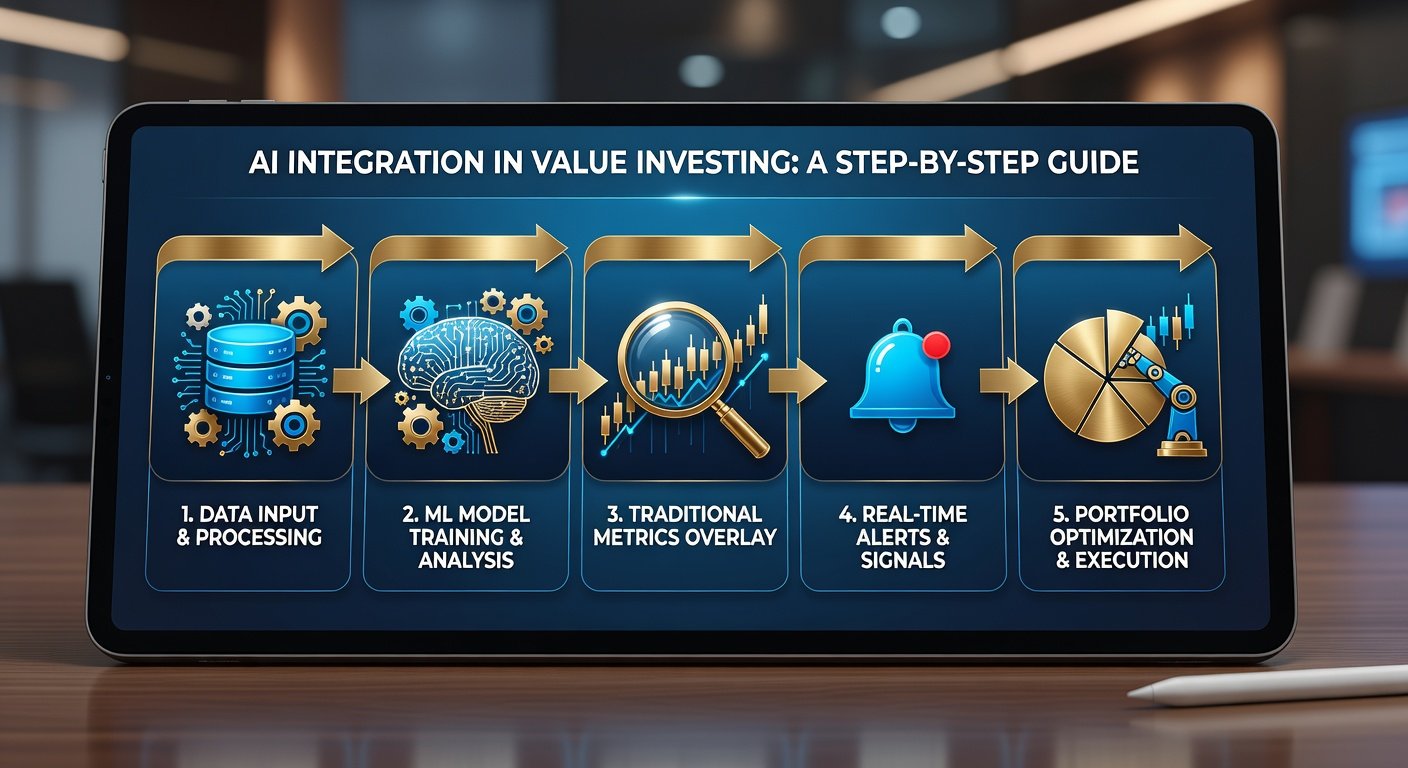
AI doesn't replace fundamentals; it amplifies them. Core metrics like P/E, P/B, EV/EBITDA, and free cash flow yield remain king. Here's seamless integration:
- Enhanced Screening: Use AI to automate multi-factor screens. Traditional tools like Finviz or Yahoo Finance get a boost with custom ML models scoring stocks on 20+ metrics.
- Dynamic Discounted Cash Flow (DCF): AI refines DCF projections by incorporating probabilistic scenarios from Monte Carlo simulations, adjusting for 2026 uncertainties like interest rate swings.
- Moat Quantification: AI evaluates competitive advantages via patent analysis and brand sentiment, quantifying Buffett's "economic moat."
Check out Investopedia's guide on value investing basics for a solid foundation before layering AI.
Real-Time Decision-Making Frameworks
In fast-moving 2026 markets, static analysis fails. AI enables dynamic frameworks:
- Automated Alerts: Platforms like TradingView with AI plugins notify on value dislocations, e.g., a 20% drop below fair value.
- Portfolio Optimization: Reinforcement learning adjusts allocations in real-time, balancing value bets with risk parity.
- Scenario Simulations: AI stress-tests portfolios against black swan events, using generative models like GANs.
The CFA Institute emphasizes ethical AI use in finance—visit their site at cfainstitute.org for standards.
Step-by-Step Implementation Tips
Ready to deploy? Follow this roadmap:
- Choose Tools: Start with accessible platforms like QuantConnect (free tier), Alpha Vantage API for data, or no-code options like Teachable Machine.
- Build Your Dataset: Aggregate free sources: SEC EDGAR filings, Yahoo Finance, Quandl. Ensure data quality to avoid garbage-in-garbage-out.
- Develop Models: Train simple regression models on Python/Jupyter. Use pre-built like Prophet for forecasting.
- Backtest Rigorously: Simulate 10+ years, including 2020 crash. Aim for Sharpe ratio >1.5.
- Integrate and Monitor: Hook into brokerage APIs (e.g., Alpaca). Set human oversight for trades.
- Scale Gradually: Paper trade first, then allocate 10-20% of portfolio.
Potential Pitfalls to Avoid
AI isn't foolproof. Steer clear of:
- Overfitting: Models too tuned to past data fail in new regimes. Use cross-validation.
- Data Bias: AI amplifies historical prejudices; diversify sources.
- Black Box Risks: Unexplainable models erode trust. Opt for interpretable AI like SHAP values.
- Latency Issues: In real-time trading, delays kill edges. Use cloud GPUs.
- Regulatory Hurdles: 2026 may tighten AI trading rules—stay compliant per SEC guidelines at sec.gov.
Mitigate with hybrid human-AI workflows: AI proposes, you dispose.
Future Outlook for 2026 and Beyond
By 2026, quantum AI could redefine value investing, processing entire market genomes instantly. Early adopters will compound edges, but discipline wins. Combine AI's power with value's timeless wisdom for resilient portfolios.
Start small, iterate, and watch undervalued assets propel your returns. Value investing endures—AI just makes it unstoppable.

No comments yet. Be the first!