 Bullish Portfolio

Introduction to Neurotech Investing in 2026
Brain-computer interfaces and neural implants stand at the forefront of medical innovation, offering transformative potential for patients with neurological conditions while presenting compelling opportunities for growth-oriented investors. As 2026 approaches, interest in neurotech stocks has intensified due to accelerating clinical progress and supportive policy environments. This comprehensive guide examines the bullish outlook for the sector, providing data-driven insights into market dynamics, leading companies, and actionable investment frameworks that go beyond surface-level analysis.
Understanding Neurotech and BCI Technology
Neurotechnology encompasses devices that directly interface with the nervous system to restore, enhance, or modulate brain function. Brain-computer interfaces translate neural signals into actionable commands, enabling individuals with paralysis to control prosthetics or digital interfaces. Neural implants, often placed via minimally invasive procedures, deliver targeted stimulation for conditions like epilepsy or chronic pain. These technologies build on decades of neuroscience research, with recent miniaturization and wireless capabilities making widespread adoption more feasible. Investors benefit from understanding the distinction between invasive surgical approaches and endovascular methods, as each carries different risk profiles and regulatory pathways.
2026 Market Forecasts and Growth Drivers
The neurotech sector is positioned for substantial expansion through 2026, fueled by aging populations, rising incidence of neurological disorders, and technological convergence with artificial intelligence. Demand for BCIs in both therapeutic and assistive applications continues to climb, supported by improved electrode durability and signal processing algorithms. Key growth drivers include expanded insurance coverage for implant procedures, increased venture funding for early-stage innovators, and cross-industry collaborations with semiconductor and software firms. While exact projections vary, the overall addressable market is expected to broaden significantly as more indications receive approval and consumer wellness applications emerge in areas such as cognitive enhancement and sleep optimization.
Leading Company Profiles
Neuralink has advanced high-channel-count implants designed for seamless integration with the brain, focusing initially on restoring mobility for those with spinal cord injuries. Their iterative clinical testing emphasizes safety and bandwidth improvements. Synchron employs a stent-based delivery system that avoids open-brain surgery, positioning it as a lower-risk alternative with strong early human data. Blackrock Neurotech provides research-grade electrode arrays widely used in academic and clinical settings, with a pipeline extending into commercial therapeutic devices. Additional players, including those developing non-invasive headsets, offer complementary exposure for diversified portfolios. Each company differentiates through proprietary hardware, software ecosystems, or unique surgical techniques that influence long-term competitive advantages.
Regulatory Tailwinds and Clinical Milestones
Regulatory progress has been a major catalyst, with the FDA granting multiple breakthrough device designations that expedite review processes for promising BCIs. These designations reflect demonstrated potential to address unmet medical needs in paralysis and sensory restoration. The National Institutes of Health supports extensive translational research, funding studies that generate the evidence required for pivotal trials. Additional momentum comes from updated guidance on digital health technologies and real-world evidence collection, which can accelerate post-market surveillance. Clinical milestones expected in 2026 include expanded enrollment in pivotal studies and potential limited commercial launches following successful safety endpoints.
Valuation Metrics and Side-by-Side Comparisons
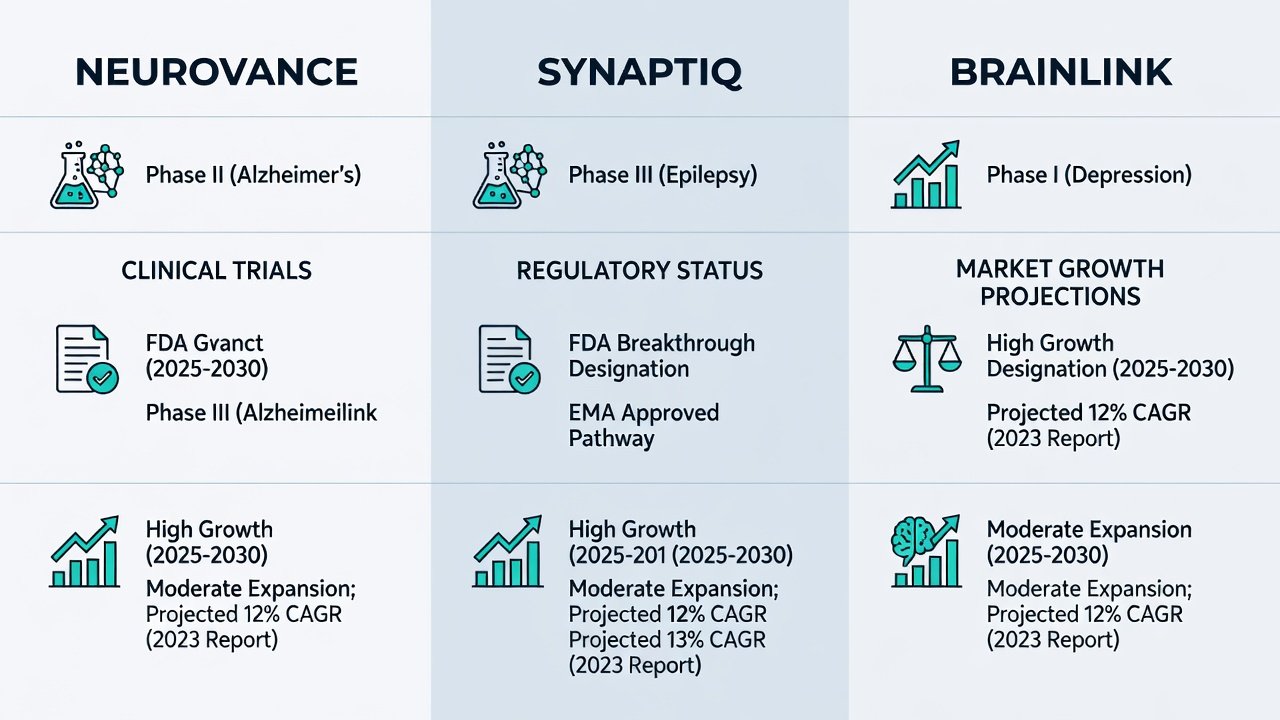
Valuing neurotech companies requires attention to forward-looking indicators such as pipeline stage, intellectual property breadth, partnership revenue, and projected peak sales per approved indication. Side-by-side analysis reveals meaningful differences: firms with completed pivotal trials often trade at higher multiples reflecting de-risked status, whereas those still in early feasibility studies may offer greater upside potential at lower current valuations. Metrics to monitor include cash position relative to burn rate, manufacturing scalability, and reimbursement pathway clarity. Comparisons also highlight varying exposure to regulatory risk, with endovascular approaches potentially facing fewer surgical complications than fully invasive methods. Investors should review quarterly updates on trial timelines and any new data readouts to adjust relative positioning among top candidates.
Risk Factors and Mitigation Strategies
Despite the optimistic outlook, neurotech stocks face notable risks including clinical trial failures, delays in regulatory approvals, and challenges in securing favorable reimbursement. Manufacturing complexities around biocompatible materials can lead to production bottlenecks, while ethical debates surrounding neural data privacy may invite additional oversight. Competitive pressures from well-funded technology giants entering the space add another layer of uncertainty. Mitigation involves spreading exposure across multiple companies with differing technological approaches, maintaining longer investment horizons to ride out volatility, and staying informed through peer-reviewed publications and regulatory filings. Portfolio stress testing against scenarios such as delayed approvals helps prepare for downside events.
Practical Portfolio Allocation Examples
Constructing a neurotech allocation begins with defining overall risk tolerance. A balanced example might dedicate 35 percent to the most clinically advanced player, 25 percent to a lower-risk endovascular specialist, 20 percent to a diversified platform company, and 20 percent to an emerging non-invasive innovator. Dollar-cost averaging over several quarters reduces timing risk around binary events like trial results. Rebalancing thresholds can be set at 5 percent deviations from target weights, triggered by major news or quarterly reviews. For smaller accounts, allocating via a healthcare-focused ETF that includes neurotech exposure provides indirect participation with built-in diversification. These examples illustrate how investors can scale positions according to conviction levels while preserving capital for opportunistic additions following positive milestones.
Mistakes to Avoid in Neurotech Investing
Common pitfalls include over-concentration in a single company without regard to technological differentiation, ignoring cash runway metrics that signal potential dilution, and chasing hype around unproven consumer applications before regulatory clarity emerges. Another frequent error is underestimating the time required for reimbursement negotiations, which can delay revenue recognition even after approval. Investors should also avoid dismissing smaller-cap names solely based on current market capitalization, as some possess robust IP that larger firms may seek to acquire. Maintaining a disciplined research process focused on verifiable clinical and regulatory progress helps sidestep these traps.
FAQ: Entry Timing and Strategy
- When is the best entry point for neurotech stocks? Align purchases with upcoming catalysts such as FDA advisory committee meetings or partnership announcements, while using limit orders to manage volatility.
- How much should a typical investor allocate? Limit sector exposure to 5-10 percent of a diversified equity portfolio, scaling based on individual risk capacity and time horizon.
- Are individual stocks preferable to sector ETFs? Individual names provide targeted upside but higher volatility; ETFs offer broader exposure suitable for those seeking lower maintenance.
- What role does international diversification play? European and Asian regulatory environments differ, so monitoring global approvals can reveal additional opportunities or risks.
- How should investors handle post-approval volatility? Expect initial swings as real-world usage data emerges; focus on long-term adoption trends rather than short-term price reactions.
Conclusion
The neurotech sector offers substantial growth potential through 2026 as brain-computer interfaces move from experimental stages toward broader clinical and commercial use. Success depends on careful evaluation of company-specific milestones, regulatory developments, and portfolio construction techniques that balance opportunity with risk management. By applying the frameworks outlined above, investors can position themselves to participate meaningfully in this evolving field while maintaining a disciplined approach.


No comments yet. Be the first!